- Published on
NBA fandom and the internet
- Authors

- Name
- Edwin Popham
I have been an NBA fan since the early 90s, when the Chicago Bulls were making their first push toward the Finals. By the time they beat the Lakers in 1991, I was fully locked in as an NBA fan, even though I had not yet watched a full NBA broadcast. What I got instead were fragments: highlights on free-to-air TV in New Zealand, NBA magazines, US television shows, clothes, shoes, and the feeling that this league existed somewhere bigger than the small window I had into it.
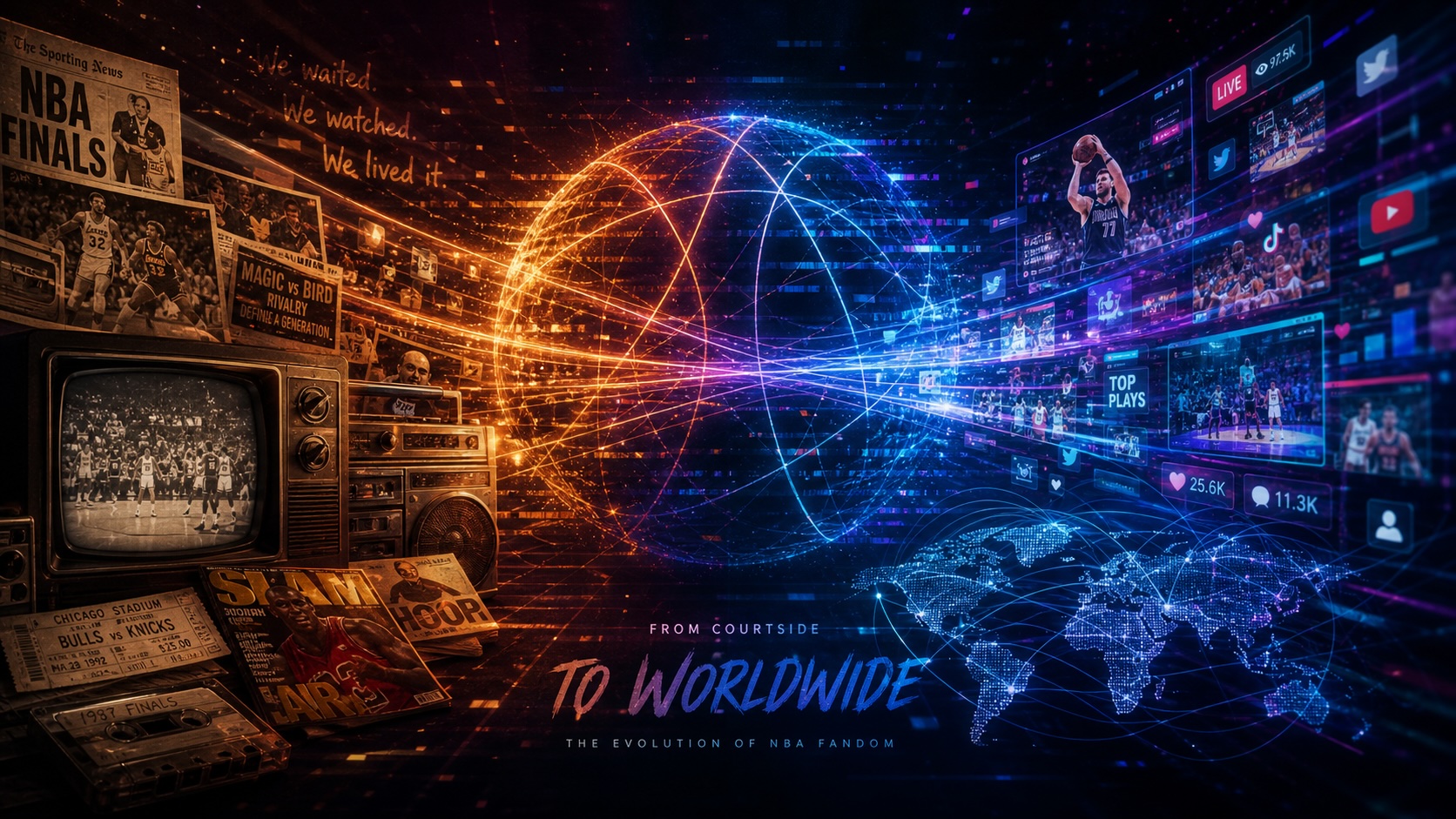
It was a world away from the internet-powered NBA experience we have today.
In the early days of the internet, I began following NBA news and game information in far more detail than I ever could through the New Zealand Herald, which only gave me limited box scores and brief glimpses of what had happened. When that online information became available to me in the late 90s and early 2000s, it felt like a major shift. For the first time, I could access in-depth statistics, daily updates, and a much clearer sense of the league as it unfolded. Teletext and satellite television had offered some coverage, but for my family those options came at a cost we could not afford.
Then, between 2000 and 2010, the NBA became even more accessible online. Images, audio, and video gave the league a fuller presence in everyday life. Live text coverage on mobile devices meant games could be followed in real time, anywhere and anytime. That changed everything. The NBA was no longer something that happened in a different country, in a different time zone, behind a wall of limited access. It became something you could carry with you.
The next major shift came when full games started being broadcast internationally online. That changed the landscape again. Suddenly, even small-market teams that rarely received much coverage in international markets were available to watch regularly. The league stopped feeling distant and selective. It became expansive. Social media changed fandom again, because now you could talk to other fans from every corner of the world. Before that, sport conversation mostly happened with your friends, your family, or the people at work the next day. Online, fandom became public, constant, and communal.
That did not just change access. It changed identity.
Being an NBA fan online means more than watching games. It means participating in a shared culture of clips, debates, jokes, arguments, and hot takes. The internet turned fandom into something more interactive and more visible. You are not just supporting a team or a player. You are expressing yourself inside a global conversation. That has made the NBA feel bigger, faster, and more alive than ever before. The league's digital footprint reflects that shift clearly: the NBA has built an enormous social and streaming presence, with huge audiences on platforms like Instagram, YouTube, and League Pass, and a fanbase that is increasingly international.
Of course, that new visibility comes with a different kind of pressure. Online fandom can be joyful, but it can also be exhausting. Everything happens faster now. Every performance is instantly judged. Every playoff series becomes a content machine. Every opinion gets amplified, challenged, clipped, reposted, and argued over. The internet has made NBA fandom richer, but it has also made it more intense. There is less room for quiet appreciation and more temptation to perform your opinions in public.
Still, for all of that, it is hard to argue with the overall result. The NBA is more global than ever, more valuable than ever, and followed by more people than ever. International players have become central to the league's identity, fans are more connected across borders, and access to games, highlights, and discussion has never been easier. What started for me as a handful of highlights and scraps of coverage has become a fully immersive experience. The internet did not just make NBA fandom easier. It made it deeper, broader, and more alive.
It remains to be seen what impact the AI revolution will have on fandom. But if the last 30 years are anything to go by, the internet has already made NBA fandom richer and more accessible than I could have imagined when I first saw those Bulls highlights on a TV in New Zealand.